
I arrived in France more than twenty years ago now.
In fact, back then, as soon as I said I was Colombian, people’s expressions would change, and the questions would come right away: drugs, violence, Pablo Escobar, the FARC, Ingrid Betancourt…
Like many Colombians living abroad, I sometimes felt that my country was reduced to a few images that had made headlines around the world. I understood these reactions. Colombia has had a complex and painful history. For several decades, drug trafficking, armed conflicts, and kidnappings left a deep mark on the country.
Yet every time I returned to Colombia, I discovered a reality far richer than that image frozen in the past—a vibrant, warm, and deeply endearing country. A land where the Andes, the Caribbean, the Amazon, the vast plains of Los Llanos, and the tropical forests of the Pacific converge.
Over the years, it is this other side of Colombia that I have wanted to share. First with my loved ones, and now with the travelers we guide today through Magelia Colombia.
Today, many people arrive with the same questions: Is Colombia dangerous? Can you travel there with your family? Can a woman travel there alone? Which regions should be avoided?
Our goal isn’t to tell you that Colombia has become a risk-free country. No country is. Our role is to help you distinguish between the country’s historical reputation, the risks that actually exist today, and the simple precautions that will allow you to travel safely.
Today’s Colombia is no longer the Colombia of the 1990s
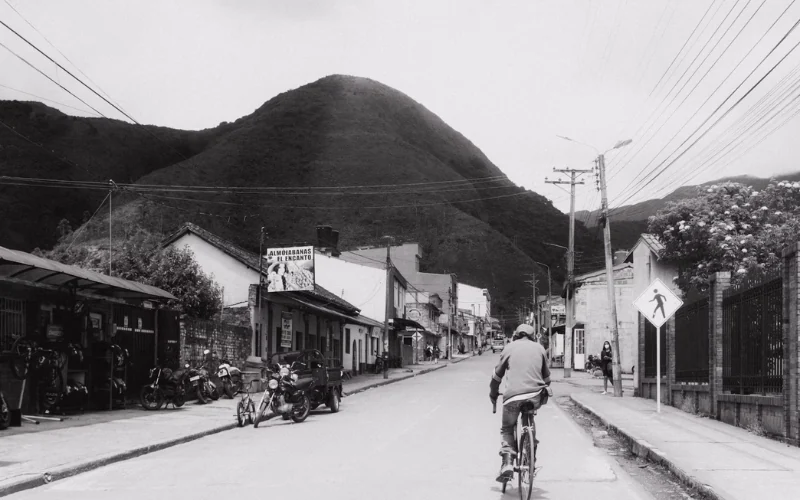
Images sometimes linger longer than events. Pablo Escobar’s face, the Medellín and Cali cartels, kidnappings, guerrillas in the jungle—these episodes actually happened, and they have left a deep mark on several generations of Colombians. But they belong to a specific period in the country’s history.
Today’s Colombia can no longer be reduced to the most violent years of drug trafficking or armed conflict. Medellín, once associated with the cartel that bore its name, is now one of the most visited destinations on the continent. Bogotá, Cartagena, the coffee region, Santa Marta, the Pacific Coast, and the Amazon are all part of well-established tourist itineraries, visited by millions of travelers each year.
However, this does not mean that all difficulties have disappeared. Some regions remain sensitive. But the situation can no longer be analyzed solely through the lens of the past.
A significant decline in violence since the 1990s
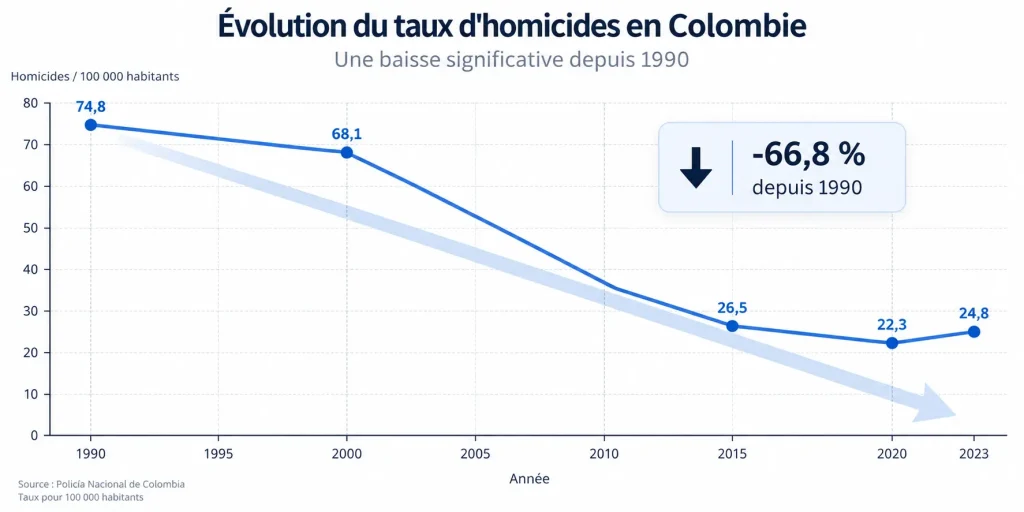
According to World Bank data, Colombia recorded approximately 75 homicides per 100,000 inhabitants in 1990. In 2023, that rate stood at around 25 per 100,000 inhabitants—a decrease of approximately 67 percent over thirty years.
| 1990 | 75,0 homicides per 100,000 people — Reference year |
| 2000 | 67,9 — or −9,5 % |
| 2016 | 26,1 — or − 65,2 % |
| 2020 | 22,6 — or − 69,9 % |
| 2023 | 24,9 — or − 66,8 % |
Source : World Bank, “Intentional homicides per 100,000 inhabitants” indicator, based on UNODC data.
These figures do not mean that Colombia has become as safe as France, nor that all of its regions are in the same situation. They do, however, show that the country today can no longer be described using statistics from the 1990s.
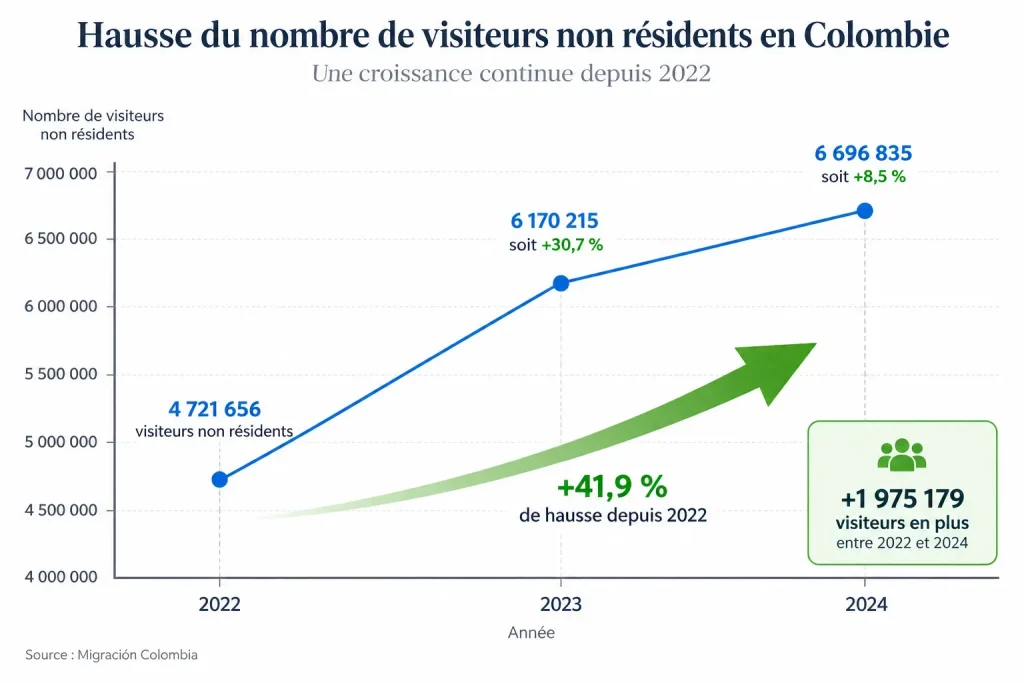
According to the Colombian Ministry of Commerce, Industry, and Tourism, 6,696,835 non-resident visitors entered Colombia in 2024—a new national record.
| 2022 | 4 721 656 nonresident visitors |
| 2023 | 6 170 215 — or +30,7 % |
| 2024 | 6 696 835 — or +8,5 % |
Source : Colombian Ministry of Commerce, Industry, and Tourism — Migración Colombia.
Of course, this increase does not prove that the risk no longer exists. It shows that Colombia has become a tourist destination in its own right and that a well-planned trip there can be enjoyed under very good conditions.
They’ve been through it. They’re telling you.
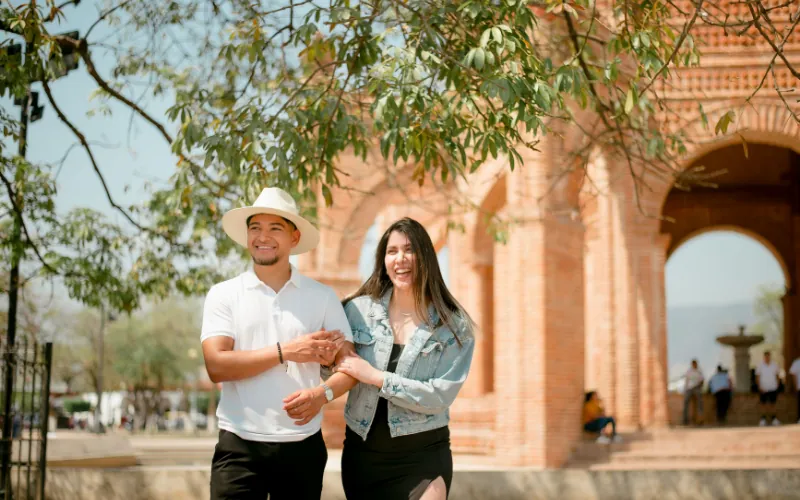
Statistics allow us to measure a country’s progress. Testimonials, on the other hand, describe what travelers actually experience once they’re there.
For the past ten years, we’ve been organizing custom trips to Colombia for French and European clients. Here’s what they write to us upon their return.
March 2026
Solo Trip — My First Time in Colombia
“I traveled alone in Colombia with a lot of anxiety at first, and yet it turned out to be the best trip of my life. From the very beginning, I felt truly taken care of, supported, and safe throughout my road trip. I had a major unexpected setback with a canceled flight—I received an immediate response over the phone, and they handled my return flight and completely reorganized my itinerary in just a few hours. Everything was taken care of quickly, stress-free, with genuine, personal attention. I would recommend Magelia without hesitation, especially for a first-time trip or a solo trip.”
February 2026 — Évelyne
Three women, fifteen days, from Bogotá to Cartagena
“Contrary to what we’d been told, we felt completely safe. It’s a real shame that your country still suffers from this reputation, which is no longer justified at all.”
Two trips. Two unexpected events. One solution.
Two different clients—one traveling alone and one with a group of friends—had concerns before their trips but returned feeling reassured. What’s more, when faced with unexpected events, we responded immediately and resolved the issues within a few hours.
This isn’t a coincidence. It’s a system.
August 2025 — The Bagnato Family
Family Trip
“We were, of course, concerned about safety in this country. What a mistake—everything was very safe. And if you’re still unsure, know that our travel advisor was available 24 hours a day. We had some flight issues during our trip, and she was available all night from 11 p.m. to 5 a.m. The result: an unforgettable trip.”
The Reality on the Ground: What We Actually Do
Today’s Colombia is not the same as it was in the 1990s. The country has changed profoundly since the 2016 peace accords—and the areas we offer our clients are stable, welcoming, and well-equipped with infrastructure.
Here’s what we do in practice:
- We only offer destinations that we know personally.
- We have teams on the ground in Bucaramanga, Medellín, Quindío, and Bogotá.
- If an area poses even the slightest risk, we remove it from our itineraries.
- In case of an unexpected event—such as a flight canceled at midnight—we’re there. Immediately.
Which areas should you avoid? What the French Foreign Ministry says
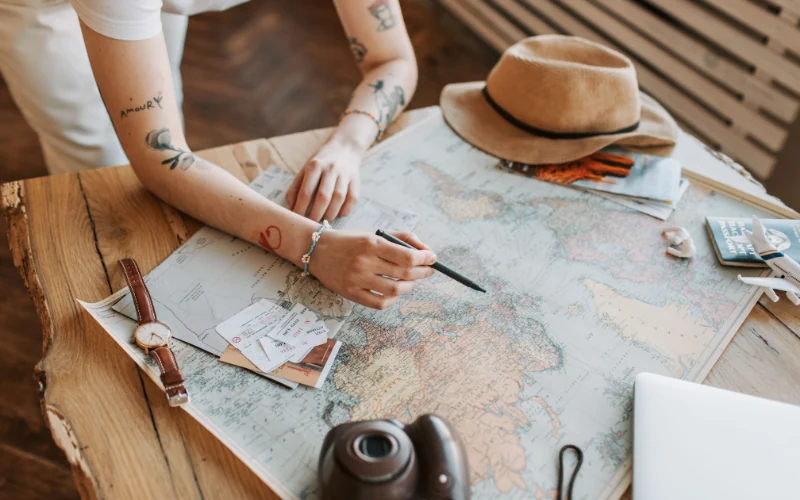
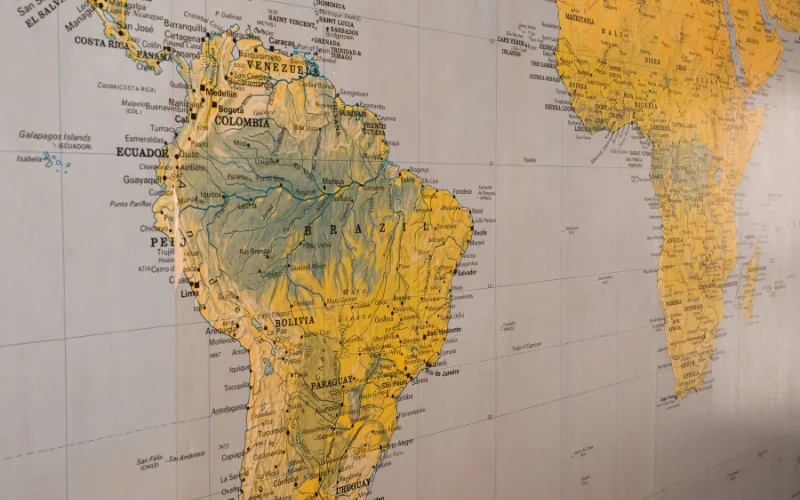
French authorities strongly advise against traveling to certain areas, primarily border regions: the borders with Venezuela, Panama, Ecuador, and Peru. These areas are not part of standard tourist itineraries and never appear on our tours.
That is why, before any trip, we recommend consulting the up-to-date recommendations from France Diplomatie (diplomatie.gouv.fr), which reflect the situation in real time.
Please note: the destinations we offer are not affected by these restrictions.
San Agustín, the Colombian Pacific Coast, the Amazon, Caño Cristales, San José del Guaviare, and Los Llanos are not listed as destinations to avoid by the French Ministry of Foreign Affairs. These destinations are fully accessible and visited by thousands of European travelers every year.
Is it safe to travel alone in Colombia?
Yes, it is entirely possible to travel alone in Colombia, provided you plan your itinerary carefully and take the same precautions you would in any major international destination.
Major tourist cities like Bogotá, Medellín, and Cartagena welcome many solo travelers every year. As is the case everywhere, we recommend sticking to tourist areas, avoiding walking late at night, and using reputable modes of transportation.
Traveling Alone as a Woman
We regularly receive questions from women who want to explore Colombia on their own. Here, too, the same precautions apply: well-located accommodations, recommended modes of transportation, and discretion regarding valuables. Ultimately, this is the same advice as for visiting many major cities around the world.
So, when the trip is well-planned, Colombia is now a popular destination for many female travelers—as evidenced by the travel review cited above.
Is Colombia a good destination for family travel?
More and more families are choosing Colombia today. The country offers a wide variety of child-friendly experiences: educational and fun activities, exploring the coffee region, strolling through colonial villages, humpback whale watching on the Pacific coast during the season, excursions to the Amazon, Caribbean beaches, and encounters with local communities.
At Magelia Colombia, we tailor itineraries to suit families’ pace, prioritizing comfortable travel and activities that are accessible even to the youngest children.
Safety in Colombia: Essential Tips for a Stress-Free Trip
Traveling in Colombia doesn’t require any extraordinary precautions. A few simple habits will help you enjoy your trip to the fullest.
| Neighborhoods | Dans les grandes villes, séjourner dans lIn large cities, stay in neighborhoods that are typically popular with travelers. |
| Transportation | Use ride-hailing apps or taxis recommended by your lodging provider. For travel between regions, domestic flights are often the most comfortable option. |
| Valuables | Avoid displaying jewelry, expensive cameras, or large sums of money—just as you would in any major city around the world. |
| Recommendations | Check France Diplomatie before departure, and once there, follow the advice of local guides and partners. |
Which regions should you prioritize for your first trip to Colombia?
Colombia is a vast country. So, rather than trying to see everything on your first visit, we recommend planning a well-rounded itinerary that allows you to fully enjoy several iconic regions.
Cartagena de Indias
A UNESCO World Heritage Site, Cartagena charms visitors with its city walls, colorful facades, and Caribbean atmosphere. It’s often one of the first places travelers fall in love with. It’s a must-see in Colombia.
Medellín
Once known for its troubled past, Medellín is now one of the most innovative cities in Latin America. Its remarkable transformation is its greatest source of pride. Its lively neighborhoods, modern transportation network, and vibrant cultural scene surprise most visitors.
The Coffee Region
Amid coffee plantations, lush valleys, wax palms, and colorful villages like Salento, Filandia, and Pijao, this region offers an authentic and peaceful side of Colombia. Additionally, the Nevados National Park is a true playground for hiking enthusiasts, featuring spectacular trails through the páramos, glacial lakes, and unspoiled wilderness.
The Colombian Pacific Coast
Still largely untouched by mass tourism, this region captivates visitors with its pristine beaches, lush jungle, and humpback whale watching between July and October. Nuquí, El Valle, and Bahía Solano are among the most iconic destinations.
Caño Cristales and San Agustín
These two sites are among the most spectacular in the country. Caño Cristales—the “river of five colors”—and the archaeological heritage of San Agustín require some special planning, but offer experiences that few destinations in the world can match.
We’ll help you create a custom trip
What Colombia reveals about itself once you’re there
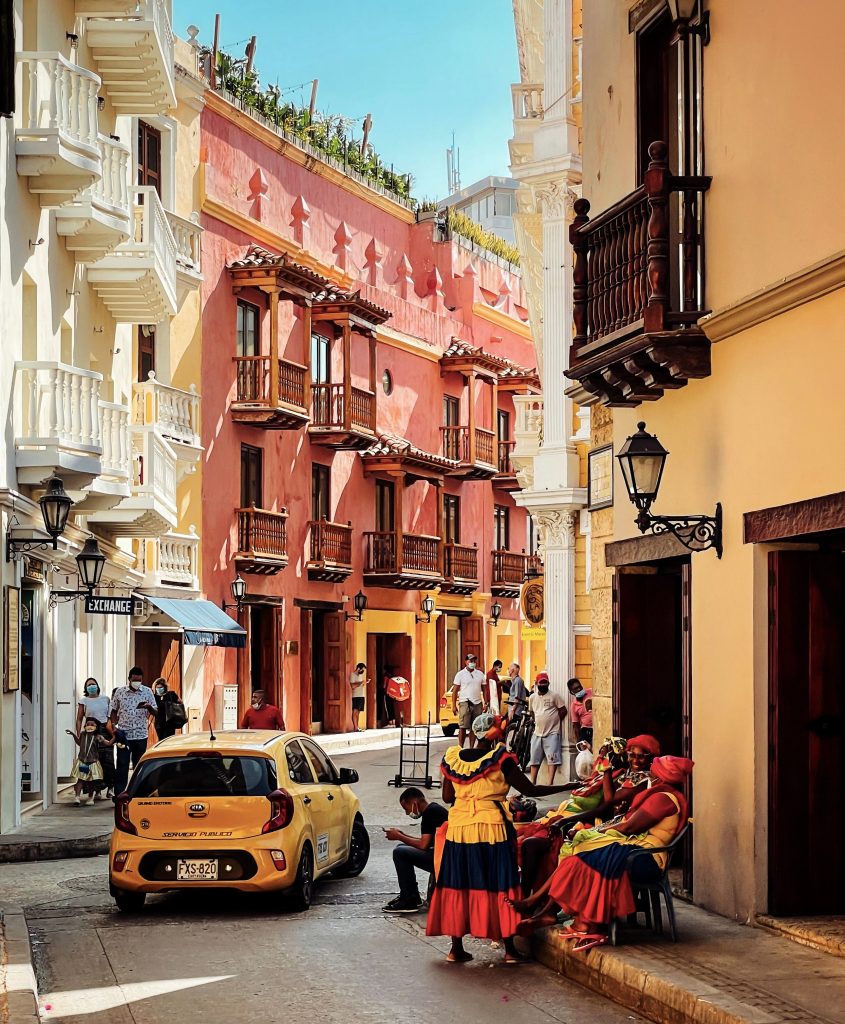
Ultimately, the question isn’t whether Colombia is a risk-free country. No country is.
In reality, the real question is how to prepare for your trip, choose your itinerary, and surround yourself with the right people. Today, Colombia welcomes several million travelers from around the world every year. Many arrive with questions. Most leave with a profoundly transformed view of the country.
At Magelia Colombia, we explore this country every day. Our role goes beyond simply organizing a trip: we work with you to create a customized journey tailored to your preferences and pace, with a local team available to assist you every step of the way.
At Magelia Colombia, we know these destinations inside and out. We don’t just book accommodations and excursions: we advise you on every detail of your trip, share our on-the-ground experience, and remain available from our first conversation until your return to France. You’re never on your own.
Have a question? Planning a trip?
Contact our team. We promise to get back to you within 48 hours to discuss your plans and provide you with the best advice.
con%74%61%63t%40mage%6ci%61-co%6co%6d%62i%65%2e%66%72 · +33 7 83 45 24 54 · +57 333 721 70 40
FAQ — Everything You Need to Know About Safety in Colombia
Is Colombia dangerous for tourists?
Colombia is not a risk-free country, but it can no longer be defined solely by its past. The main tourist destinations welcome millions of travelers each year under safe conditions. As with any destination, it’s recommended that you plan your itinerary, follow the advice of local authorities, and exercise common sense.
Which areas should be avoided in Colombia?
French authorities primarily advise against traveling to areas bordering Venezuela, Panama, Ecuador, and Peru. However, the destinations we offer—San Agustín, the Pacific Coast, the Amazon, Caño Cristales, and Los Llanos—are not subject to these restrictions. Check France Diplomatie before your departure for the most up-to-date information.
Can you travel alone in Colombia?
Yes. Many travelers explore Colombia on their own every year. The major cities and main tourist regions are easy to visit as long as you stay alert, stick to visitor-friendly neighborhoods, and use reliable transportation.
Can a woman travel alone in Colombia?
Yes. Colombia is now a popular destination for many female travelers. As with any major international destination, it’s advisable to choose well-located accommodations, avoid certain nighttime trips, and remain aware of your surroundings.
Can you travel with your family in Colombia?
Absolutely. Colombia offers many family-friendly experiences: colonial villages, the coffee region, Caribbean beaches, whale watching, the Amazon, and encounters with local communities. A well-planned itinerary makes it easy to travel comfortably with children.
Is Medellín a dangerous city?
Medellín has changed dramatically over the past few decades. Today, it ranks among Colombia’s most visited cities. Some neighborhoods are worth visiting, while others are best avoided—as is the case in any major city. If you follow the advice of your guide or travel agency, exploring Medellín is generally a very safe and enjoyable experience.
When is the best time to visit Colombia?
Colombia can be visited year-round thanks to its diverse climates. Certain times of year are particularly ideal for whale watching on the Pacific coast (July–October), hiking in the Andes, or exploring the Caribbean. We recommend choosing your travel dates based on the regions you wish to visit.
Why choose a local travel agency to explore Colombia?
A local travel agency has in-depth knowledge of the realities on the ground. It selects accommodations, organizes transfers, tailors itineraries, and remains available throughout your trip—including in case of unforeseen events, day or night. It’s this support that allows you to travel with peace of mind.


