
There are places you have to earn. Tayrona National Natural Park is one of them.
Not because it’s hard to get to – from Santa Marta, you can be there in under an hour. But because it demands something of you: to slow down, to walk, to look. To let the forest envelop you before the sea comes into view through the trees.
Tayrona National Natural Park covers nearly 150 km² between the Sierra Nevada de Santa Marta and the Caribbean Sea, in northern Colombia. It is one of the country’s most visited parks, and one of the best preserved. This is no coincidence: the indigenous peoples who have lived there for centuries watch over it with a dedication that few institutions can match.
What Tayrona National Park hides behind its beaches
Most visitors come for the beaches. Cabo San Juan del Guía, La Piscina, Arrecifes – names that crop up on forums, photos that inspire dreams. And yes, these beaches certainly live up to the hype.
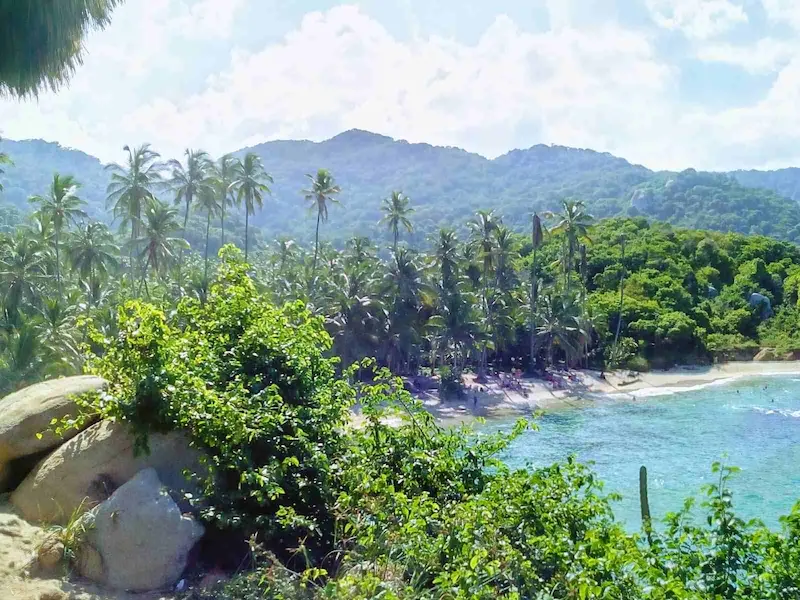
Mais le parc Tayrona, c’est d’abord une forêt.
A dry tropical forest at the bottom, which gradually gives way to rainforest as the altitude increases. A rare transition in vegetation, visible within a few kilometres’ walk. Strangler figs entwine around centuries-old trunks. Bromeliads trap moisture in the heights. And everywhere, a density of life that reminds us that this ecosystem has existed long before our arrival. It is this contrast — the dense forest, then suddenly the turquoise sea — that makes Tayrona so memorable. You never forget it.
The wildlife of Tayrona National Park: what you can see
Tayrona National Park is home to a remarkable diversity of wildlife, the result of the convergence of two environments: the forest and the sea.
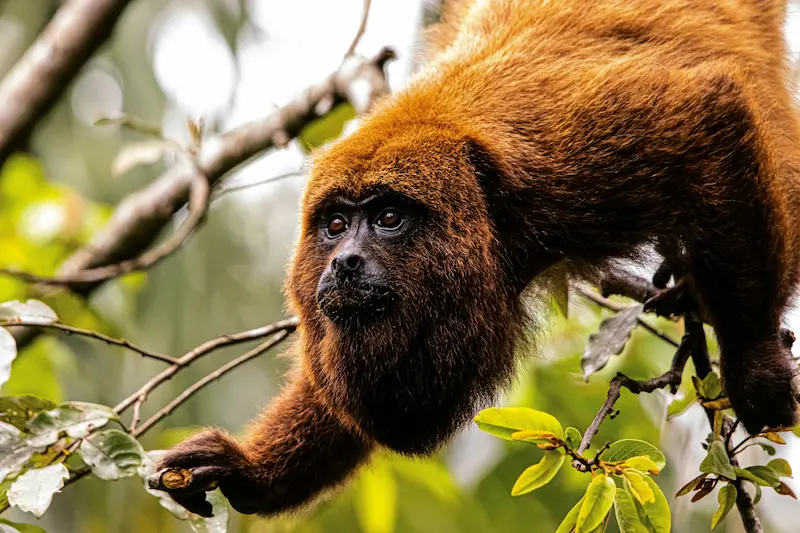
In the forest: Howler monkeys are the first to make their presence known at dawn; their deep cries echo through the trees even before the light breaks through – it’s a wake-up call you won’t forget. More discreet, capuchin monkeys move in groups through the canopy. You may also come across two-toed sloths clinging to low branches, oblivious to the world passing beneath them.
The park is home to over 300 recorded bird species: toucans, parrots, kingfishers, and, if you have patience and a good guide, the rare Bangs’s cotinga, a species endemic to the Sierra Nevada, may make an appearance.
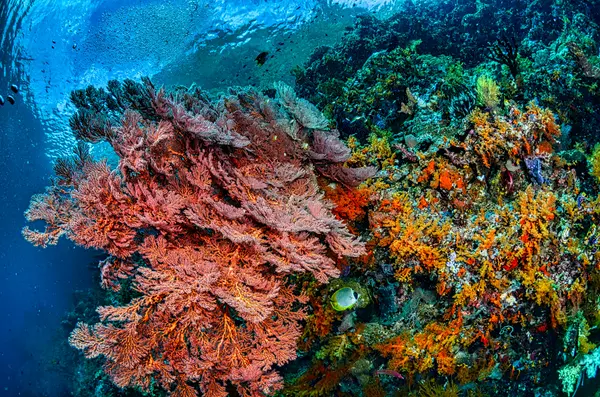
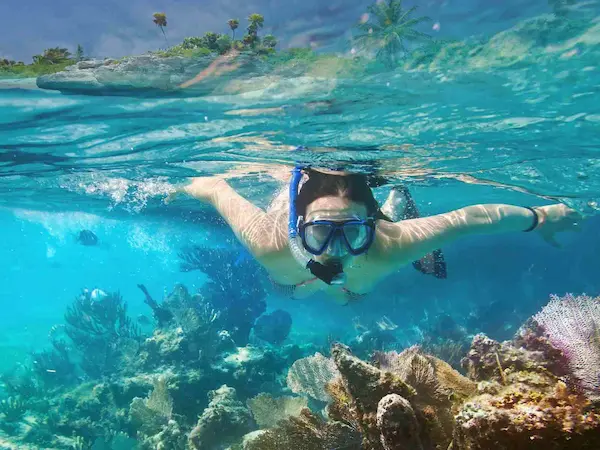
In the sea: The coral reefs bordering the park are among the best preserved in the Colombian Caribbean. When snorkelling around La Piscina, you’ll find yourself swimming amongst parrotfish, moray eels, starfish and, occasionally, sea turtles that come to the surface without paying any heed to visitors.
The flora: a forest that changes as you climb
What makes Tayrona National Park unique is the way the vegetation changes as you climb towards the Sierra Nevada.
The coastal fringe is dominated by tropical dry forest: twisted trees, cacti, and species adapted to the pronounced dry season. Higher up, the humidity increases and the vegetation becomes denser. You enter the rainforest, with its orchids, tree ferns and vines that create a semi-darkness even at midday.
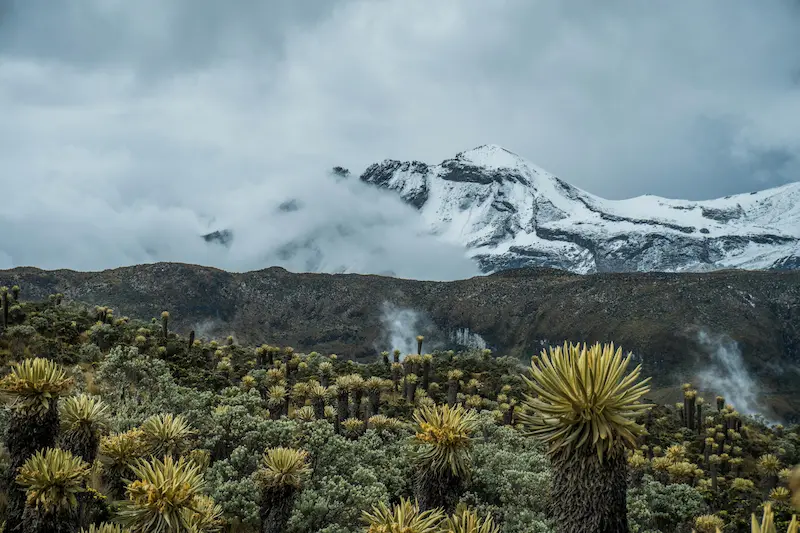
This plant diversity is directly linked to the presence of the Sierra Nevada, the world’s highest coastal mountain range, whose eternal snows feed the rivers that flow through the park and into the sea.
The Kogi people: guardians of the park for centuries
To visit Tayrona National Park without mentioning the Kogi is to miss the point entirely.
The Kogi, or Kagaba, are the direct descendants of the Tayrona, a pre-Columbian civilisation that inhabited these lands before the arrival of the conquistadors. Today, they live in the highlands of the Sierra Nevada, in villages accessible only on foot, following a way of life passed down orally through the generations.
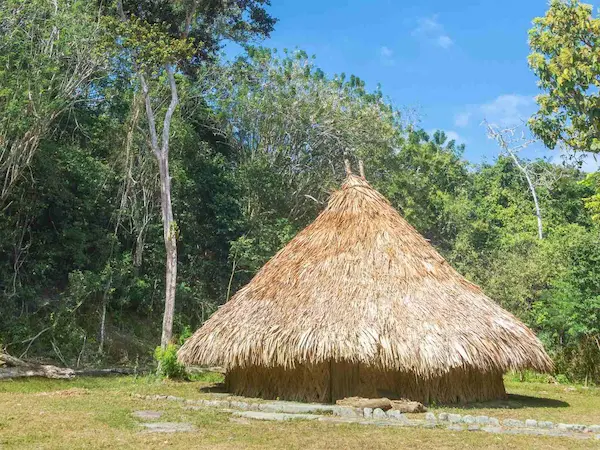
For the Kogi, the Sierra Nevada is the “heart of the world”. And Tayrona National Park marks its sensitive edge, the boundary between their sacred territory and the outside world. It is largely thanks to them that the park has been preserved. Their knowledge of the land, natural cycles and ecological taboos constitutes a form of environmental intelligence that science is only just beginning to document.
Certain tours offer a guided encounter with members of the Kogi community, not as a tourist attraction, but as a genuine exchange, conducted with respect for their conditions. It is one of the most memorable experiences we have organised for your travellers.
Why does Tayrona National Park close three times a year?
This is one of the first things to check before planning your visit.
Tayrona National Park closes three times a year:
- 1–15 February
- 1–15 June
- 19 October–2 November
These closures are not arbitrary. They are in response to requests from the Kogi people, as part of an agreement between the indigenous communities and the park management authorities. These periods coincide with rituals for the regeneration of the land—times when, according to the Kogi worldview, the forest and the sea need silence.
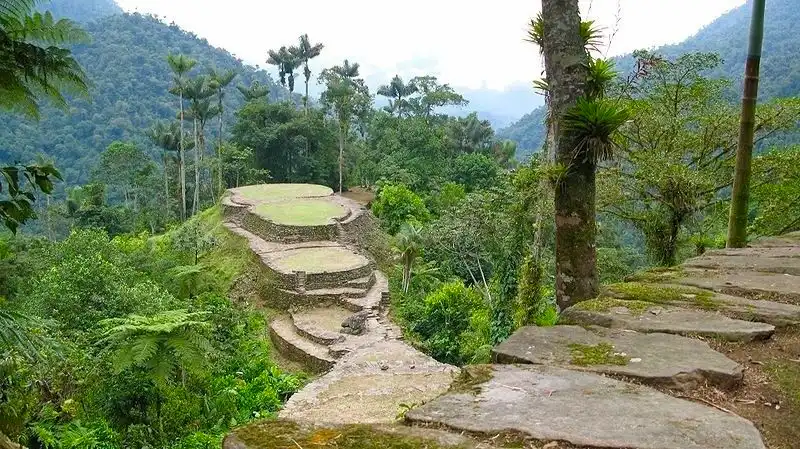
This is one of the few places in the world where an indigenous community has been granted direct say in the management of a national park. It is an example that deserves to be recognised and respected.
Please note: if your trip coincides with one of these periods, the park is completely closed to visitors. We always take these restrictions into account when planning our itineraries.
Activities in Tayrona National Park
A walk between the beaches
The park is best explored on foot, along marked trails that link the various beaches. The most popular route, from El Zaino to Cabo San Juan, takes around 2½ to 3 hours each way. The path winds through the forest, climbing and descending the coastal hills, and offers views of the sea through the trees.
Snorkelling
La Piscina is the place to be: a sheltered cove with calm waters and excellent visibility. Ideal for beginners and experienced divers alike. Equipment can be hired on site.
Swimming
Please note: not all beaches in the park are suitable for swimming. Arrecifes, despite its appearance, is dangerous due to strong currents. Cabo San Juan and La Piscina are the recommended areas.
A night in the park
Spending the night in the park changes everything. In the morning, before the day’s visitors arrive, the forest belongs to the monkeys and birds. A few accommodation options are permitted within the park: simple eco-lodges, hammocks suspended between the trees, and a few wooden bungalows. This is the best way to experience Tayrona, not just to visit it.
How to include Tayrona National Park in your trip to Colombia
Tayrona National Park is a natural fit with Santa Marta and Cartagena, two cities between one and five hours’ drive away.
If you’re looking for a trip that combines Colombia’s major highlights – Bogotá, the coffee region, Cartagena and Tayrona – our 10-day Colombia Essentials Tour is designed with this in mind. The park is included as a full-day visit, with an overnight stay in Santa Marta so you can enjoy the park early in the morning, before the crowds arrive.
For those who want to make the Caribbean coast the heart of their trip, with more time in Tayrona, a meeting with the Kogi people and beaches that are still relatively uncrowded, our ‘Paradise Beaches of Colombia’ tour offers 13 days spent between Bogotá, Providencia, Cartagena and the Sierra Nevada. A slower, more immersive experience.
Practical information for visiting Tayrona National Park
Access: From Santa Marta, it’s a 45-minute to 1-hour drive to the entrance of El Zaino. Shared shuttle buses leave regularly from Santa Marta market.
Entrance fee: Admission is charged. Prices vary depending on nationality. Unfortunately, it is no longer possible to book online in advance.
Best time to visit: December to March for the Caribbean, with clear skies and calm seas, but it is possible to visit all year round. Avoid the closures listed above.
Recommended duration: One day is the minimum. Two nights in the park allow you to really settle into the rhythm of the place.
What to bring: Closed-toe walking shoes (the trails are stony), mosquito repellent, biodegradable sun cream (the coral reefs are well worth it), and very little plastic – the park is officially plastic-free.
What Tayrona National Park teaches us
There is something special about walking towards a beach through a forest. About hearing the monkeys before you see the sea. About knowing that the ground beneath your feet has been preserved not by an administrative decision, but by the tenacious determination of a people who have never ceased to regard it as sacred.
You don’t really ‘visit’ Tayrona National Park. You enter it, let it wash over you, and leave with something hard to put into words, but which feels like respect.
Would you like to include Tayrona National Park in your next trip to Colombia? Contact our team to create a bespoke itinerary that takes into account closure periods and gives you access to experiences off the beaten track.


